For a start, it’s the only organ which develops from scratch in adults and is self-disposable when no longer required. A placenta is able to multi-task, acting as liver and lungs for the foetus. Most of us know that the placenta is a sophisticated filter, allowing nutrients, oxygen, water and metabolites to pass to the foetus, but preventing bacteria and viruses from doing so. But, how this selectivity for certain molecules works is not yet completely understood.
The placenta is also responsible for providing a copy of almost all of the maternal antibodies to the foetus, giving a new-born child protection from many infections during the first months of its life, until its own immune system develops.
By producing hormones that regulate the growth of its vascular network, the placenta is able to extract the maximum amount of nutrients from the mother for the growth of the foetus. It can adapt to situations such as undernourishment in the mother, by growing in order to accommodate more blood, allowing more nutrients to be transferred to the growing foetus. Perhaps the most fascinating aspect of the placenta is that it is made up of two different sets of cells, those of the mother and of the foetus. Despite the presence of in effect foreign cells, the placenta is hosted by the mother’s immune system for nine months without rejection, ordinarily the fate of any other foreign material.
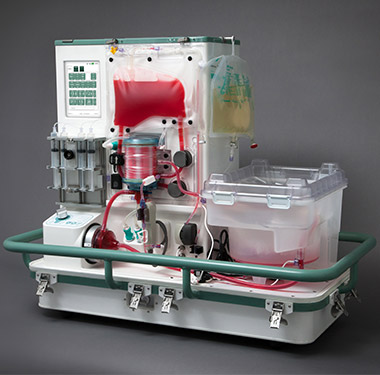
At Team, we know something about the challenges and complexity of providing a device to deliver stable blood flow, oxygen, nutrients and temperature control in an organ from our experience in developing OrganOx’s liver perfusion system, so when we consider what it has to do, the placenta is – to slightly misquote Darwin – a wondrous organ.