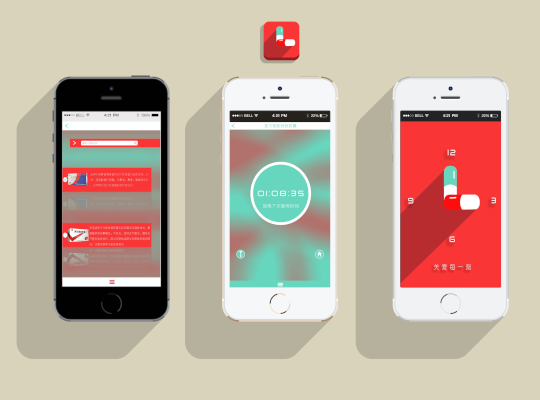
I guess here is evidence of this shift, illustrated by Apple’s new iOS7 operation system. The radical departure is dividing opinion and it is interesting to see that Apple are not leading this trend for once, which we’ve already seen from Windows and Android.
So why is it relevant to us?
The medical devices we create can never be considered in isolation to the other products with which we surround ourselves. Sure, people have a different set of expectations of how their inhaler on insulin pen should look and feel compared to their smartphone. But these medical devices will be held in one hand whilst their smartphone is on the other, they’ll be kept in the same handbag or pulled out of the same pocket.
What we consider ‘appropriate looking’ today in the medial industry is affected by the products which are created by much faster moving industries such as consumer electronics. Whether you love it or hate it this new GUI style is here to stay (at least for a couple of years) and if it looks a bit odd now, we’ll soon get used to it. Remember how outlandish the Olympic 2012 logo looked when it was first unveiled… I remember my colleague Andy Pocock saying that we shouldn’t think it looks ‘right’ now otherwise it means it’s already out of date for 2012.
At Team we do a lot of work helping our clients to define and implement visual brand language on their product offerings and our advice is always: put the stuff that’s likely to age on the bits that are easiest to change. GUI is one of those ‘bits’ along with labeling, packaging and patient information. After all it’s a lot cheaper to change a digital file than it is to recreate your tooling or rebuild your production line!