Digital UX UI pages (31)

Optimising user experiences using behavioural science models

Our behaviour design team helps you uncover what truly drives your users, applying behavioural science to shape digital experiences that motivate, support and guide them effectively. Drawing on user research, proven behavioural models and cognitive science principles, we help you create digital interfaces that meet real user needs.

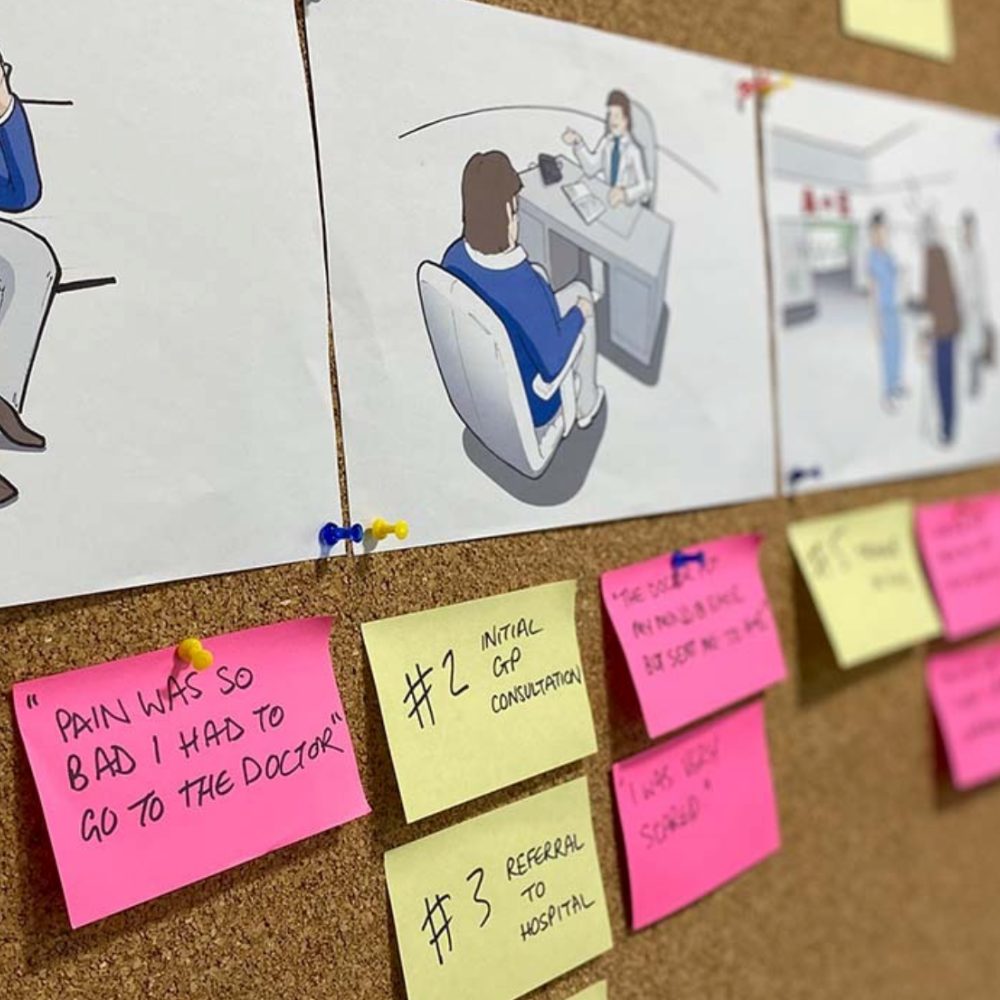
Working collaboratively, our user insights specialists and UX designers conduct focused research to identify key user behaviours, exploring cognitive nuances specific to their condition, needs and expectations. Drawing on desk based and primary research, we map out user journeys to understand what influences their decisions, highlighting key pain points that need to be addressed along the way. This approach enables a clear, evidence based direction for behaviour centred design, that improves usability and strengthens the impact of your digital product.

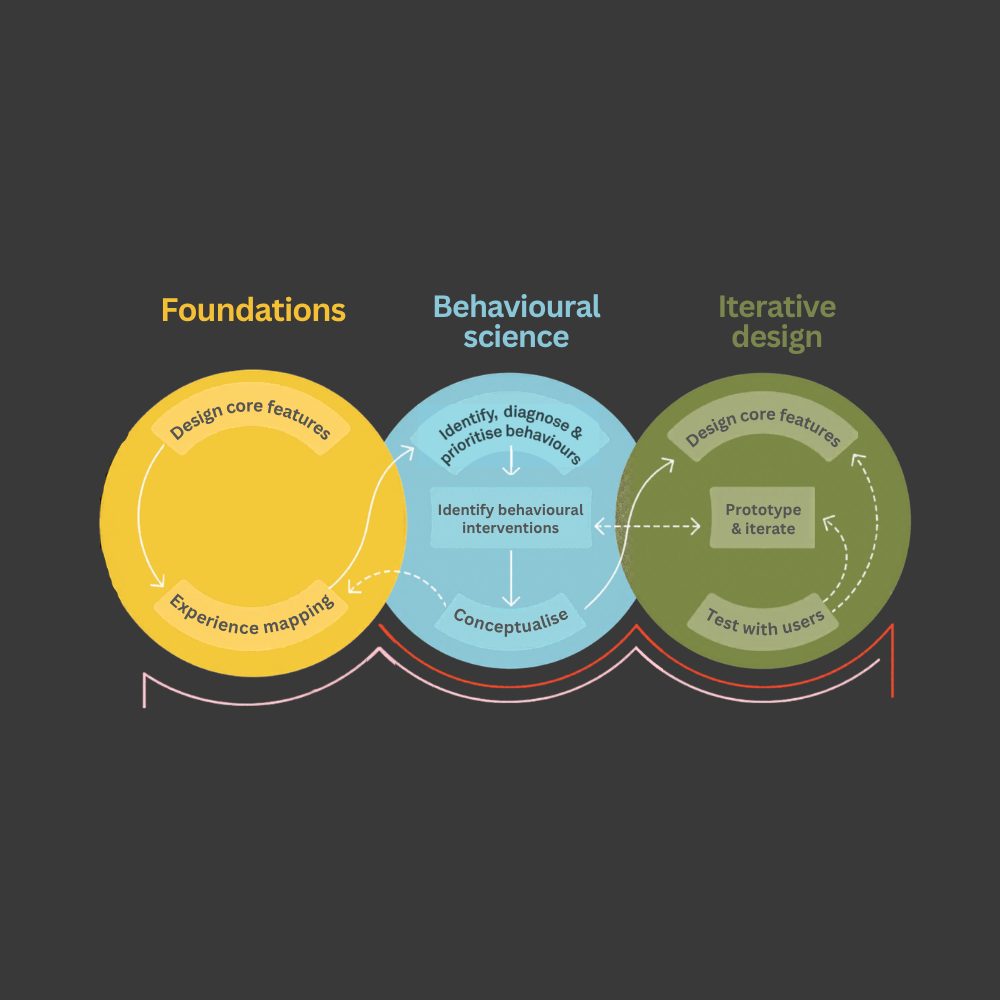
Our behaviour design framework

User research and journey mapping

The application of behaviour design relies on a robust understanding of the user experience in the context of the care ecosystem. In the first step of our behaviour design framework, we help you build a clear understanding of how users move through their care journeys by mapping the full experience – highlighting key touchpoints, tools, pain‑points, barriers, emotions and decision moments. This research allows us to identify and understand the target behaviours with the greatest impact on key outcomes and design a digital solution that integrates seamlessly into real-world experiences.

Behavioural science

Using the COM‑B model, we systematically analyse target behaviours and understand what enables or prevents them. This approach allows us to identify evidence‑based techniques and interventions that are specifically suited to your users and can help them optimise healthy and engaged behaviours.

Iterative design

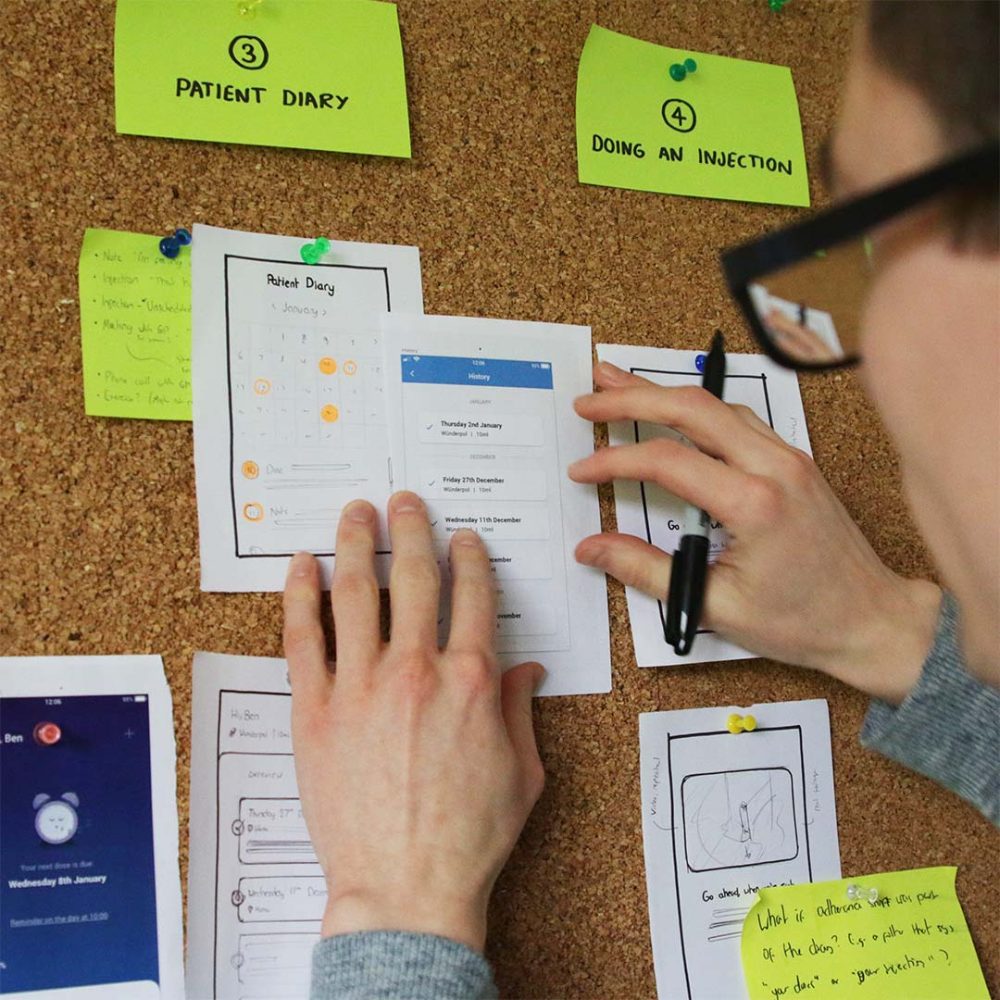
We bring concepts to life quickly using both low and high‑fidelity prototypes, translating behaviour change techniques into digital features and design principles. Rapid prototyping allows us to test these features with users and ensure they are having the desired effect. This iterative approach reduces development risk, speeds up alignment across stakeholders and ensures the final solution is both practical and genuinely effective for users.

A digital health solution for stroke rehabilitation

Find out how we designed a solution to support recovery and encourage positive behaviours for stroke rehabilitation patients.

Read the case study

Digital UX UI pages (16)

Exploring and prioritising behaviours

Once we have a clear picture of your users’ journeys and the behaviours that matter most for your product’s success, we use behavioural science models such as COM‑B to understand the factors shaping those behaviours. This allows us to identify which behaviours are most important to address in your product’s UX, as well as opportunities for design interventions that can make the greatest impact on user outcomes.

Digital UX UI pages (17)

Tailored behavioural interventions

Once the priority user behaviours are defined, we map these to proven behavioural design techniques that offer a robust, evidence‑based foundation for concept generation and UX/UI design. This framework helps us guide your product’s concept generation in a clear strategic direction, without restricting creativity or innovation. Once these concepts are generated, we continually evaluate the design process against the selected techniques to ensure the intended behavioural influence is carried through into the final user experience.

From research to iterative design

An optimal behaviour design process requires research and design activities to constantly feed into each other. Research should guide ideation and design decisions, and designs need to be regularly tested and iterated. We implement rapid testing methods to ensure regular input from your end users and experts, helping to validate your designs and account for individual differences in user behaviours.

Explore our full digital design offering

Untitled design (11)

Digital UX and UI

Helping you develop seamless, intuitive interfaces that enhance usability and system performance.

Explore

Digital UX and UI
Digital UX UI pages (8)

UX and UI design

UX and UI design for digital healthcare products.

Explore

UX and UI design
Digital UX UI pages (8)

Connected devices

Building a harmonious ecosystem for your digital health experience.

Explore

Connected devices

Looking to apply behaviour science to your digital health solution?

Get in touch to find out how we can apply a behaviour design framework to your product development.